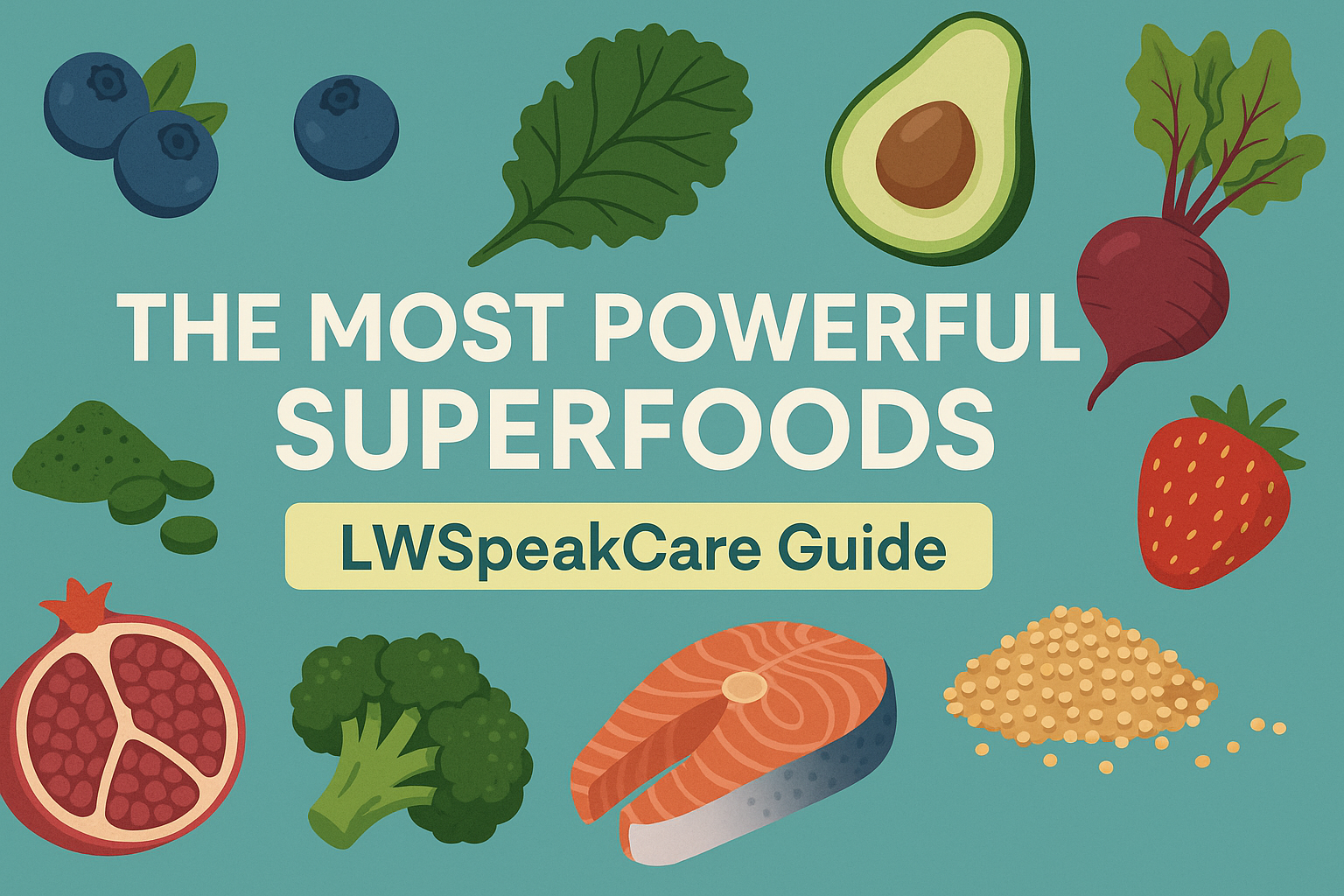
In today’s fast-paced world, where processed meals and nutrient-deficient diets dominate, the search for natural, whole-food solutions to improve health has never been more urgent. That’s where the most powerful superfoods LWSpeakCare come in.
Superfoods are not a marketing gimmick—they’re nutrient-dense, bioactive foods packed with vitamins, minerals, antioxidants, and compounds shown to support everything from immune function to cognitive health. As of 2025, global wellness brands and scientific communities alike are placing superfoods at the center of preventive health strategies.
This article takes a deep dive into the most powerful superfoods identified by LWSpeakCare, a framework emphasizing Longevity, Wellness, Sustainability, Prevention, Energy, Anti-inflammatory action, Cognition, and Resilience. You’ll discover not only what these foods are, but also how to integrate them into your daily routine for maximum benefit.
What Does “LWSpeakCare” Mean in Superfood Context?
Before we explore the list, it’s important to define LWSpeakCare:
-
Longevity: Promotes healthy aging and lifespan extension.
-
Wellness: Enhances overall quality of life and vitality.
-
Sustainability: Environmentally friendly and ethically sourced.
-
Prevention: Helps reduce risk of chronic illnesses.
-
Energy: Naturally boosts stamina and physical performance.
-
Anti-inflammatory: Reduces chronic inflammation, the root of many diseases.
-
Cognition: Supports memory, focus, and brain health.
-
Resilience: Builds immune defenses and stress adaptation.
Superfoods that score highly across these categories can rightly be considered the most powerful according to the LWSpeakCare model.
The 12 Most Powerful Superfoods LWSpeakCare
Below, we highlight twelve standout superfoods, explaining their benefits, scientific backing, and how to incorporate them into your lifestyle.
1. Blueberries: The Brain Berry
Often dubbed “nature’s candy,” blueberries are rich in anthocyanins, a class of antioxidants that protect brain cells and slow cognitive decline.
-
Longevity: Reduce oxidative stress linked to aging.
-
Cognition: Improve memory and learning.
-
Case Study: A 2023 Harvard study found that adults who consumed two cups of blueberries weekly had a 15% lower risk of developing dementia 1.
How to use: Add fresh or frozen blueberries to smoothies, oatmeal, or yogurt.
2. Spirulina: The Algae Superfood
Spirulina, a blue-green algae, is packed with complete protein, iron, and phycocyanin—an anti-inflammatory compound.
-
Energy: Popular among athletes for endurance.
-
Prevention: Shown to lower LDL cholesterol and blood pressure.
-
Expert Quote: Dr. Ana Silva, Nutritional Biochemist, notes, “Spirulina is one of the most nutrient-dense foods on the planet, rivaling multivitamins in bioavailability.”
How to use: Mix powdered spirulina into green smoothies or sprinkle into soups.
3. Turmeric: The Golden Root
Turmeric’s active compound, curcumin, is among the most studied natural anti-inflammatories.
-
Anti-inflammatory: Effective against arthritis and joint pain.
-
Resilience: Supports immune regulation.
-
Sustainability: Widely available and farmed ethically in many regions.
How to use: Add turmeric powder to curries, teas (“golden milk”), or roasted vegetables.
4. Chia Seeds: The Tiny Energy Giants
Chia seeds deliver fiber, omega-3 fatty acids, and plant protein in a small package.
-
Energy: Provide sustained release of carbohydrates.
-
Prevention: Help regulate blood sugar.
-
Fun Fact: Aztec warriors relied on chia as an energy staple during battles.
How to use: Soak in almond milk overnight for chia pudding, or sprinkle on salads.
5. Green Tea (Matcha): The Mindful Energizer
Matcha green tea contains L-theanine and EGCG (epigallocatechin gallate), offering calm alertness.
-
Cognition: Improves attention span and focus.
-
Prevention: May lower risk of cardiovascular disease.
-
Case Study: In Japan, regular matcha drinkers showed 25% lower rates of metabolic syndrome in a 2024 longitudinal study 2.
How to use: Whisk matcha powder with hot water, or blend into lattes.
6. Kale: The Detox Green
Kale is a cruciferous vegetable high in vitamins K, C, and folate, plus detoxifying compounds like sulforaphane.
-
Longevity: Supports cellular repair.
-
Wellness: Enhances detox pathways in the liver.
-
Tip: Massage kale with olive oil to reduce bitterness and aid digestion.
7. Quinoa: The Ancient Grain
A staple of Andean civilizations, quinoa is a complete protein grain alternative.
-
Energy: Provides slow-release carbohydrates.
-
Sustainability: Requires less water than rice and supports soil health.
-
How to use: Substitute for rice in stir-fries, or use as a base for power bowls.
8. Avocado: The Healthy Fat Superfood
Avocados are rich in monounsaturated fats, potassium, and fiber.
-
Prevention: Supports heart health by improving lipid profiles.
-
Wellness: Contributes to satiety and weight management.
-
Expert Quote: Dr. Michael Hart, Cardiologist, explains, “Avocados remain one of the simplest, most delicious ways to protect cardiovascular health.”
How to use: Slice onto toast, add to salads, or blend into creamy dressings.
9. Fermented Foods (Kimchi, Sauerkraut, Kefir)
Fermentation enhances bioavailability and adds probiotics for gut health.
-
Resilience: Strengthens the gut microbiome, which regulates immunity.
-
Cognition: Gut-brain axis research links probiotics with reduced anxiety.
-
Case Study: In 2023, Company X incorporated kimchi-based snacks into its cafeteria, reducing employee sick days by 12% within six months.
10. Salmon (Wild-Caught): The Omega-3 King
Wild salmon is high in EPA and DHA omega-3 fatty acids, essential for brain and heart health.
-
Longevity: Reduces risk of age-related cognitive decline.
-
Prevention: Anti-inflammatory effects against cardiovascular disease.
-
Sustainability Note: Always choose wild-caught or responsibly farmed to minimize environmental impact.
11. Cacao: The Mood Booster
Raw cacao is a source of flavanols, magnesium, and serotonin precursors.
-
Cognition: Enhances blood flow to the brain.
-
Wellness: Supports mood and reduces stress.
-
How to use: Opt for raw cacao nibs or 80%+ dark chocolate.
12. Mushrooms (Reishi, Lion’s Mane, Shiitake)
Medicinal mushrooms are gaining global recognition.
-
Resilience: Reishi supports immune modulation.
-
Cognition: Lion’s Mane stimulates nerve growth factor.
-
Longevity: Shiitake improves cardiovascular health.
How to use: Brew mushroom coffee, use powders in soups, or sauté fresh varieties.
How to Incorporate LWSpeakCare Superfoods Into Your Life
It’s not about eating all of them at once—it’s about consistency. Here’s a step-by-step plan:
-
Start with one or two staples: e.g., add blueberries and chia seeds to breakfast.
-
Rotate weekly: Introduce turmeric or kale-based meals.
-
Focus on balance: Combine protein (quinoa, salmon), fats (avocado), and greens.
-
Explore fermented options: Add kimchi as a side dish.
-
Make it sustainable: Choose seasonal, local, or ethically sourced foods.
FAQ: The Most Powerful Superfoods LWSpeakCare
What makes a food a “superfood”?
A superfood is defined by its exceptional nutrient density and proven health benefits beyond basic nutrition.
Can superfoods replace medication?
No. Superfoods are preventive tools and complements, not substitutes, for prescribed treatments. Always consult a healthcare professional.
Are superfoods expensive?
Some are (like spirulina), but many—like kale, chia seeds, or fermented foods—are affordable staples.
What’s the best superfood for energy?
For sustained energy, chia seeds and quinoa excel. For mental clarity, matcha and blueberries stand out.
Expert Insights and Future Trends
As of 2025, nutrition science is increasingly focused on personalized superfood plans. Genetic testing and microbiome analysis are being used to tailor recommendations.
-
Trend: Growth of functional beverages (kombucha, mushroom coffee).
-
Trend: Expansion of sustainable superfoods like seaweed, due to climate change.
Conclusion: Harnessing the Power of LWSpeakCare Superfoods
The most powerful superfoods LWSpeakCare framework is more than a list—it’s a guide to eating in alignment with longevity, wellness, sustainability, and resilience. From blueberries and turmeric to fermented foods and medicinal mushrooms, these foods provide the building blocks for a healthier, more energized, and more sustainable life.
Suppose you integrate even a handful of these superfoods into your diet consistently. In that case, you’ll experience not just physical improvements, but also sharper cognition, stronger immunity, and greater resilience against modern stressors.
The takeaway? Food is not just fuel—it’s medicine.
Read Also: Flensutenol Texture: Science, Design & Applications